REVIEW · IBIZA
Snorkeling-out : Transparent Kayak or SUP Tour
Book on Viator →Operated by Antonio Simon Gonzalez · Bookable on Viator
Transparent water has a way of changing your mood.
This Snorkeling Out experience in Ibiza pairs transparent boats with a guided route through a bay that’s less touristy than it sounds, plus a historical story thread that runs from Phoenician and Carthaginian times to the Romans.
I especially like the simple wow-factor of the underwater viewing setup—your eyes get help from the lens, so you’re not just guessing what’s down there. And I like that the guides keep the experience practical while pointing out what matters in the sea, like poseidonia and the seabed life you can actually see.
One thing to plan around: this tour is weather-dependent, so if conditions are poor you may get a different date or a full refund.
In This Review
- Key highlights at a glance
- Transparent Kayaks in Ibiza: Why this feels different
- Pou d’es Lleo bay: where the story and the seabed meet
- How the 2-hour outing really works (10:00 departure)
- Stop at Pou d’es Lleo: the 15-meter “Snorkeling Out” lens experience
- Clay bath break: what it is and who it’s for
- What about the “100-year-old steamer” on the way back
- The service and organization that make it feel smooth
- Price and value: is $52.09 worth it?
- Who should book this transparent kayak or SUP tour
- Practical tips to make your morning better
- Should you book Snorkeling Out in Ibiza?
- FAQ
- What time does the tour start?
- How long is the experience on the water?
- What’s the difference between the transparent kayak and SUP?
- How deep can you observe with the snorkeling-out lens?
- Is the clay bath included?
- What happens if the weather isn’t good?
Key highlights at a glance
- 15-meter observation lens: see what’s down there with a clear view tool, not guesswork
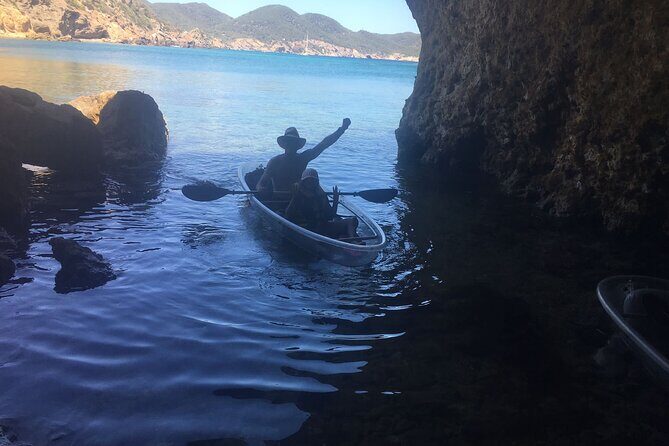
- Two boat styles: transparent kayak (2 people) or SUP (1 person) based on your comfort level
- Pou d’es Lleo bay route: small-boat access to underwater ravines and natural features
- Historical framing: stories tied to Phoenicians, Carthaginians, and Romans
- Possible clay bath break: a short stop for a natural clay rinse with skin-remineralizing claims
- Small group feel: maximum 16 travelers, so you’re not lost in a crowd
Transparent Kayaks in Ibiza: Why this feels different
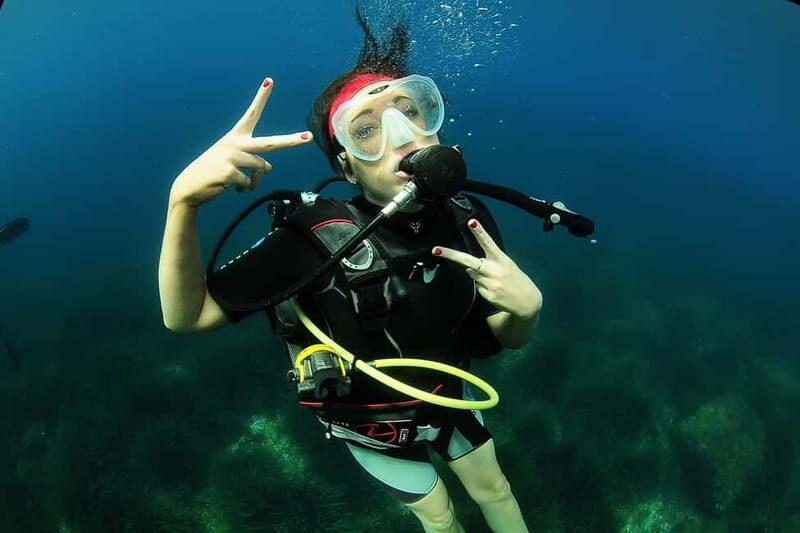
Ibiza gets a lot of attention for nightlife. But this kind of morning (or late late-morning) shows a calmer side. The big trick here is the transparent kayak or SUP format: instead of strapping on snorkel gear and hoping visibility is perfect, you get a seat-and-look setup with a viewing lens that supports a 15 meters deep observation.
You’ll still want to pay attention like you would on any water activity. Yet the experience is more forgiving. If you’re new to snorkeling or you just don’t want the hassle of breathing gear, this format helps you focus on what you came for: seabed shapes, marine life, and the “how is that even there?” moments.
The other reason it’s worth your time is the guide-led pacing. The route isn’t a random loop. You’re given context while you float along—history above water, living seagrass and underwater features below.
Other stand-up paddle and SUP tours we've reviewed in Ibiza
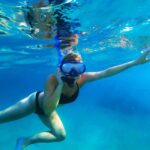

Pou d’es Lleo bay: where the story and the seabed meet
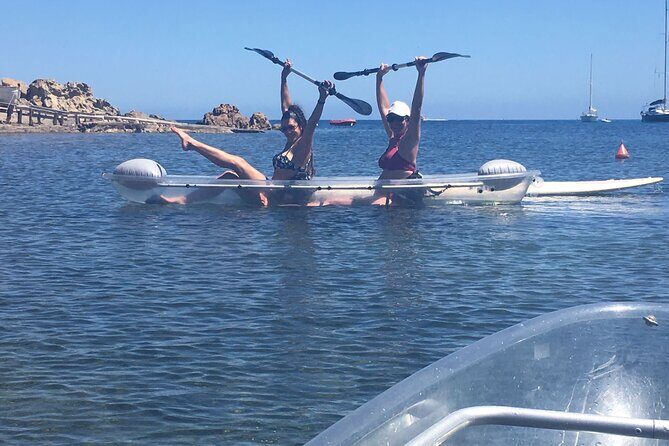
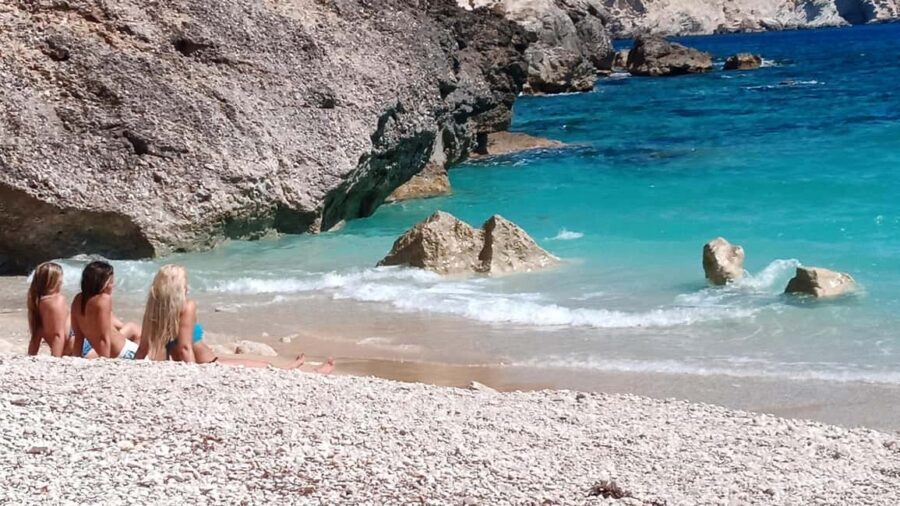
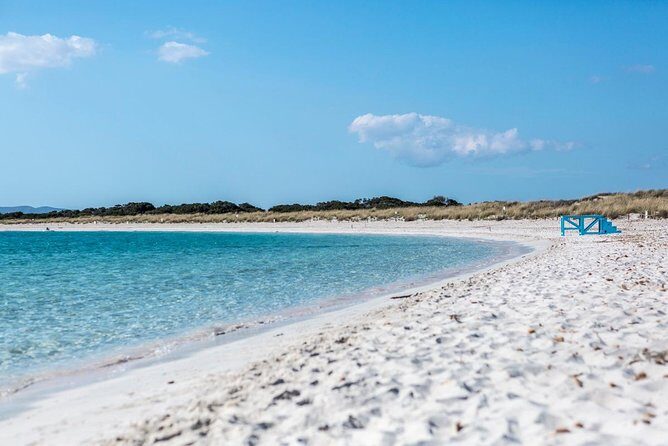
The tour starts at Platja Pou d’es Lleo, and that matters because you’re not traveling across the island just to get water access. You’re right where the bay offers its best conditions for this style of viewing.
What makes Pou d’es Lleo especially interesting is the way the tour connects three different layers:
- Underwater features you can reach with small boats
- Marine habitats, including poseidonia (seagrass) and the ecological role it plays
- Human history, tied to eras before Christ—Phoenicians, Carthaginians, and Romans
That last part can sound like generic “ancient ruins” talk, but here it’s used as a way to change how you look. You’re essentially being asked to view the sea as an environment humans depended on long ago, not just as a pretty backdrop for photos.
And yes, you’ll get that “only in documentaries” feeling. The transparent view setup makes marine life and seabed textures easy to spot at a glance—without you having to fight for position or surface repeatedly.
How the 2-hour outing really works (10:00 departure)
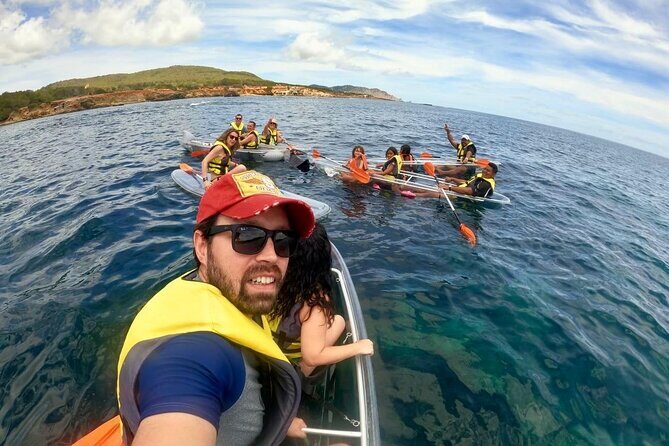
The schedule is simple, which is good. You meet at 10:00 am, then you’re on the water for about 1 hour 30 minutes, with the rest of the time built around check-in and getting everyone ready.
The tour is designed for a small number of people—up to 16—so you’re not waiting around forever. You also won’t be stuck with a chaotic pack of strangers swamping each other’s viewing lanes. With clear boats, that matters, because you want the space to look down without someone kicking up noise and confusion near you.
There are two boat types:
- Transparent kayak: 2 people per kayak
- SUP: 1 person per SUP
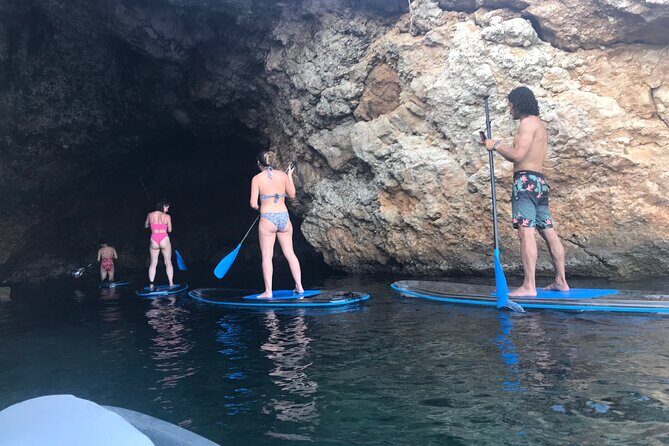
That choice changes the vibe. Kayaks are more stable for looking. SUP can be great if you’re comfortable balancing and you want a more active feel. If you’re unsure, pick based on what you’ll actually enjoy for the whole hour and a half, not just during the first five minutes.
Stop at Pou d’es Lleo: the 15-meter “Snorkeling Out” lens experience
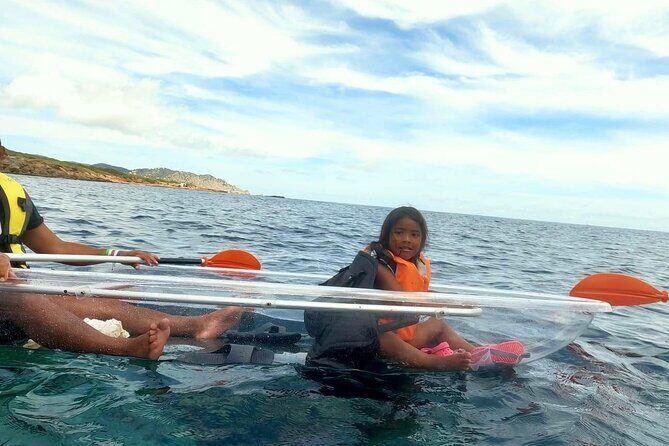
This is the heart of the tour. The boat doesn’t just float—you get an active guide-led observation session.
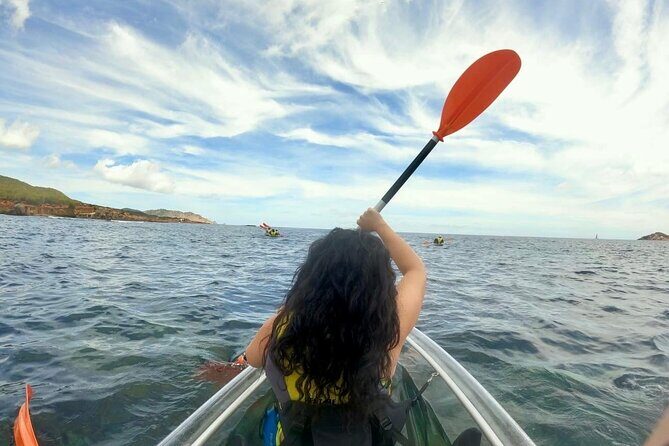
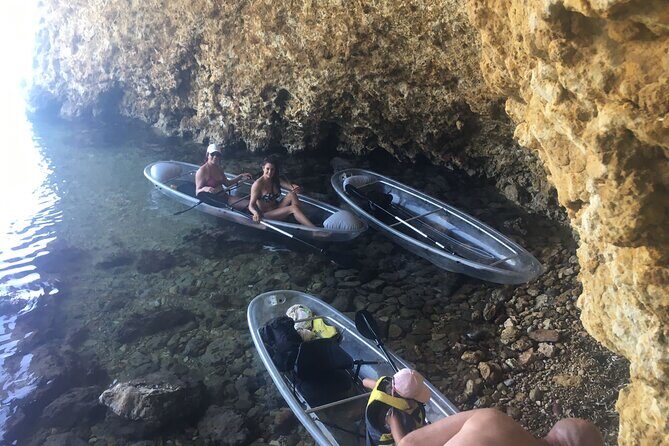
The experience is built around what they call snorkeling out: using the lens for a 15 meters deep observation. In plain terms, you’re meant to watch the seabed and what lives on it from a stable position. That’s why the transparent hull matters. It makes the underwater view feel direct, like you’re peeking into a natural aquarium, not staring at water and hoping it cooperates.
As you move through the bay, the guide points out:
- Hidden ravines reachable only with small boats
- Seabed fauna and flora (the living parts, not just rocks)
- The role and importance of poseidonia, which is seagrass and an important habitat
A practical note: poseidonia can look like simple underwater grass, but it’s doing serious work—providing shelter and feeding areas for marine life. When a guide explains why it matters, it stops being “nice plants” and turns into real ecology you can visually track.
You’ll also appreciate that the tour is set up for observation, not speed. That’s how you get the chance to slow down, look, and actually register what you’re seeing.
Clay bath break: what it is and who it’s for
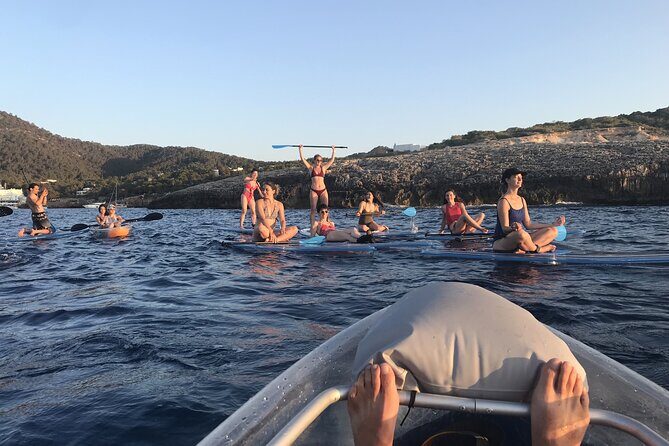
Midway, there’s a chance for a short break for a natural clay bath. The idea is straightforward: you get a brief on-water or shore-adjacent break for a clay rinse, described as beneficial and remineralising on the skin.
If you’re the type who likes small sensory add-ons—warm clay feel, quick reset, a bit of fun without turning the day into a spa day—this is a nice bonus. It also fits the tour’s theme: local bay, local natural resources, and a guided story around both.
If your skin is sensitive, keep it in mind as you decide. The tour frames the clay as beneficial, but the only safe stance is to treat it as optional and listen to your own comfort.
Other kayak and snorkel tours we've reviewed in Ibiza

What about the “100-year-old steamer” on the way back
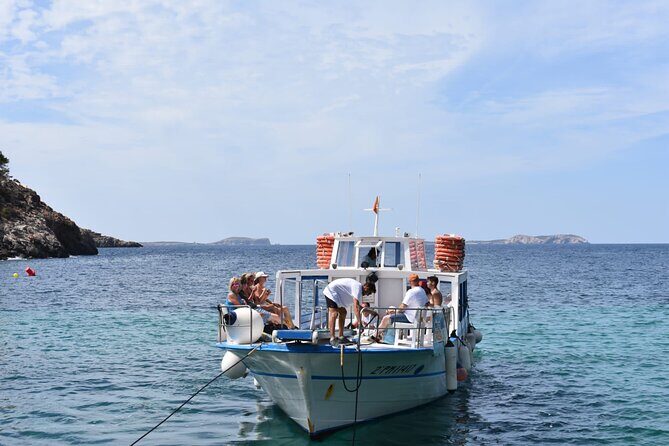
On the return, you may be able to see remains of a steamer that sank about 100 years ago. This is one of those elements that can turn a routine water session into a “wait, what?” moment.
Even if you don’t get perfect visibility, the framing is useful. It nudges you to look at how the seabed carries history—wreck material becoming a new structure for marine life over decades. That’s the kind of connection that makes you pay attention longer than a standard swim.
If you’re a history lover, this is a satisfying payoff. If you’re more of a marine-life person, it still works, because wrecks can influence habitat in the same way rocks do.
The service and organization that make it feel smooth
Four things stand out from the overall tone of feedback: helpful guides, comfort, efficient organization, and the clear viewing setup doing the heavy lifting.
That matters for your planning. On water activities, “good” isn’t just about the view. It’s also about how quickly people get oriented. A guide who keeps things calm and clear helps you enjoy the moment instead of worrying about timing, safety, or where to look.
Also, the experience is rated highly for being genuinely pleasant with a lot of “you’re taken care of” energy. That doesn’t mean it’s stiff or formal. It means you get recommendations and guidance so you can relax and enjoy the seabed views.
Price and value: is $52.09 worth it?
At $52.09 per person, this isn’t a throwaway add-on. But the value comes from what’s included in the experience style:
- You’re paying for a transparent kayak or SUP format plus the viewing lens concept
- You get guided historical context while you observe marine habitat
- The group size is limited to 16, which usually means better attention per person
- You get a structured 2-hour block starting at 10:00, with a real on-water focus (about 1.5 hours)
So you’re not just “paying to float.” You’re paying for guided spotting and a sea-view method that’s easier than traditional snorkel for many people. If you’ve ever tried snorkeling and spent half your time adjusting goggles, this is the kind of experience where you can skip a lot of that frustration.
Is it worth it if you only want a quick swim? Maybe not. But if you want seabed observation with real narration, it’s priced like an activity, not a rental.
Who should book this transparent kayak or SUP tour
This tour fits best if you want a mix of nature viewing and guided context, without turning the day into hardcore sports.
You’ll likely enjoy it if you:
- Are curious about marine life but don’t love snorkeling hassle
- Want poseidonia and seabed features explained in a practical way
- Like small-group water time rather than a big party scene
- Enjoy nature with history tied in, not history shoved at you nonstop
You might skip it if:
- You’re looking for a fast, adrenaline-style experience
- You get easily disappointed by weather changes and don’t want schedule uncertainty
- You prefer swimming in open water rather than sitting/looking from a viewing-oriented setup
Practical tips to make your morning better
The data here doesn’t list a bunch of gear requirements, so I’ll keep this realistic and based on how these tours usually feel: you want to be comfortable enough to look for long enough.
- Wear swim-ready clothing you’re okay getting wet.
- Bring sunscreen and a hat. Even when the experience is slow, you’re still in the sun.
- If you’re sensitive to wet clay, treat the clay bath as optional.
- If you choose SUP, pick what matches your balance comfort. Kayak is often the calmer choice if you mainly want to observe.
One more mindset tip: go in expecting to look, not to conquer distance. The joy here is that the seabed details are the main event.
Should you book Snorkeling Out in Ibiza?
If you want a high-value, easy-going way to see what’s happening under the surface in Ibiza, I’d lean yes. The transparent kayak or SUP setup plus the lens-based viewing is built for real observation, not just floating. Add the guide-led historical framing and the possible clay bath break, and you get a rounded half-day activity that doesn’t require advanced water skills.
The only real caution is weather. This experience needs good conditions. If that’s a deal-breaker for you, plan flexible days.
If you can handle a short schedule and you want something more meaningful than a basic beach swim, this is a strong pick.
FAQ
What time does the tour start?
It starts at 10:00 am and returns back to the meeting point.
How long is the experience on the water?
The guided part is about 1 hour 30 minutes, and the total duration is about 2 hours.
What’s the difference between the transparent kayak and SUP?
Transparent kayaks fit 2 people each. The SUP option is for 1 person.
How deep can you observe with the snorkeling-out lens?
The transparent setup allows observation down to 15 meters.
Is the clay bath included?
There is a short break possible for a natural clay bath, but it’s described as a break during the experience rather than something guaranteed in every case.
What happens if the weather isn’t good?
The activity requires good weather. If it’s canceled due to poor weather, you’ll be offered a different date or a full refund.