REVIEW · IBIZA
Ibiza Coasteering Experience
Book on GetYourGuide →Operated by Coasteering Ibiza · Bookable on GetYourGuide
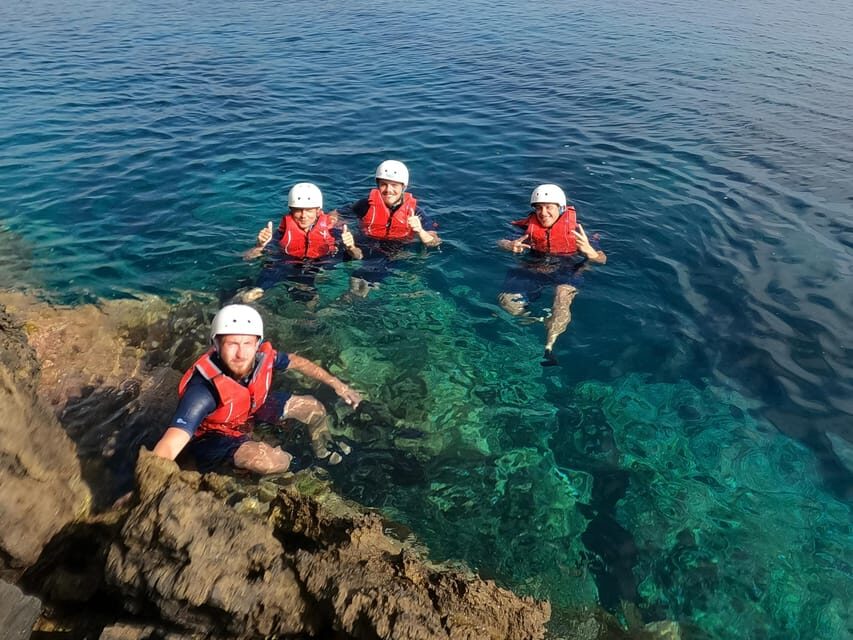
Cliff jumps meet shoreline climbing in Ibiza. This is coasteering at Platja Pou d’es Lleo—scramble over rocks, swim in clear water, and choose how big you go with the optional jumps up to 10 meters. I like that the whole route is built around variety: you get cliffs, sea caves, natural pools, and those moments where your body realizes it can do more than your brain planned.
What I really love is the way it’s paced for different comfort levels. With experienced guides (including Marcos), you get a clear safety briefing, gear that actually fits the job, and the confidence boost that comes from solid instruction instead of guesswork. A second win for me: it feels like you’re moving along a coast that most people never see, with quiet coves and rock formations that look otherworldly.
One thing to consider: it’s not a walk on sand. You’re doing about 2 hours of scrambling along the coast, you’ll get wet, and it’s not suitable for non-swimmers or anyone with certain health limitations.
In This Review
- Key Things That Make This Coasteering Stand Out
- From Platja Pou d’es Lleo to the Oldest Rocks Around
- What a 2.5-Hour Coasteering Session Feels Like (and Who It Fits)
- Safety First: Wetsuit, Shoes, and the Guide’s Role
- Stop-by-Stop: Platja Pou d’es Lleo to the Sea (and Back)
- 1) Starting point and safety briefing at Platja Pou d’es Lleo
- 2) Pou des Lleo: first taste of the wild water
- 3) Hidden coastline swimming and quiet access
- 4) Viewpoint segments: scenic breaks that recharge your legs
- 5) Pou des Lleo hiking along rugged boulders
- 6) Returning to Platja Pou d’es Lleo
- The Best Moments: Cliff Jumps, Sea Caves, and Transparent Pools
- What to Bring (So You Don’t Waste the Best Part of the Day)
- Language and Group Comfort: Marcos-Style Confidence
- Price and Value: Why $77 Can Make Sense Here
- Who Should Book This Coasteering Experience (and Who Should Skip)
- Book it if…
- Skip it if…
- Should You Book Coasteering Ibiza?
- FAQ
- Where is the meeting point?
- How long is the Ibiza coasteering experience?
- What’s included in the price?
- What should I bring?
- Are the cliff jumps mandatory?
- How high can the cliff jumps be?
- Do I need to be able to swim?
- What fitness level do I need?
- Is it safe if the sea is rough?
- What languages are the instructors?
Key Things That Make This Coasteering Stand Out
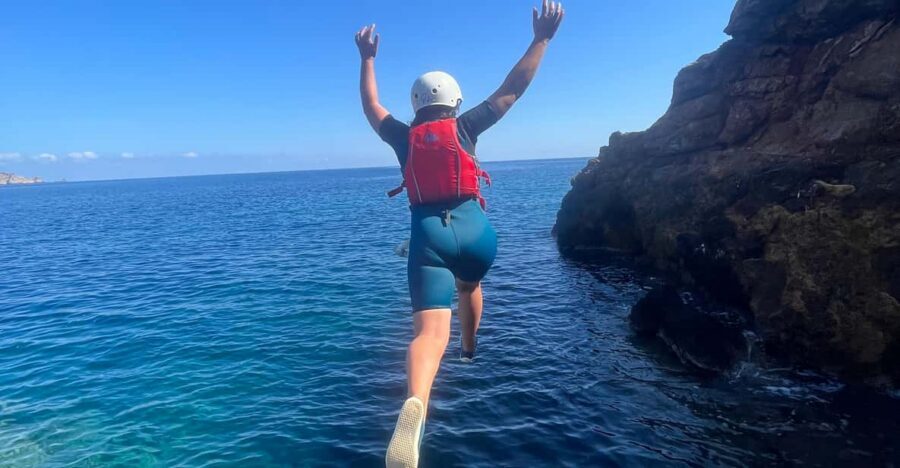
- Optional cliff jumps from 2–10 meters, so you control your level of adrenaline
- Triassic rock scenery rising from the sea, with dramatic coastline formations
- Sea cave + gully climb that turns “swim time” into real adventure work
- Natural pools and clear-water swimming where the water looks almost see-through
- Guide-led safety and pacing, with a focus on you setting boundaries
- Wetsuit, shoes, and safety equipment included so you’re not showing up unprepared
From Platja Pou d’es Lleo to the Oldest Rocks Around
Your morning starts at Platja Pou d’es Lleo, with a simple arrival that feels like you’ve slipped into a local routine. You’ll meet near Restaurante Salvadó, then drive past the small beach and up a dirt track to the car park. It’s an easy setup, but it also hints at the bigger point: you’re not doing this from a big beach promenade. The access is intentionally more “out of the way.”
After everyone groups up, there’s a safety briefing that matters here. Coasteering mixes climbing hands-first with water movement, so you need to understand routes, timing, and how the guide expects you to react if the sea is acting up. Then the fun part begins: you move away from the typical tourist path and toward a coastline shaped by time and force.
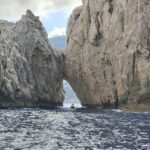
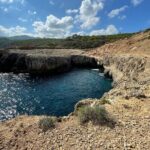
The standout backdrop is the geology. You’ll be on a stretch where Ibiza’s oldest rocks (from the Triassic period) rise from the sea. That means the rocks look and feel older than the usual “Mediterranean cliff” vibe—you get sharper textures, more rugged shapes, and that sense of raw coastline rather than polished scenery.
If you're still narrowing it down, here are other tours in Ibiza we've reviewed.
What a 2.5-Hour Coasteering Session Feels Like (and Who It Fits)
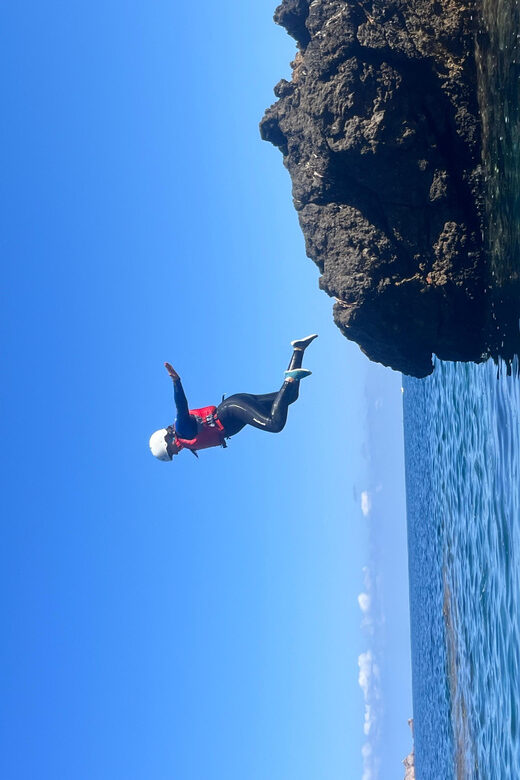
This runs about 2.5 hours, built around one main block of physical effort and a few different “modes” of activity. The tour includes about 2 hours of scrambling along the coast, plus swimming sections. So yes, you’ll laugh, but you’ll also use your arms and legs more than you expect.
It’s best for you if you’re comfortable with water and basic climbing movement. All jumps are optional, which helps a lot. The guide can also help you choose “go big” moments versus “step through it” moments, especially if you’re new.
It’s not a match if you’re a complete beginner to swimming, if you’re not comfortable in open water, or if you fall into the “not suitable” categories: children under 12, pregnant women, anyone with back problems, wheelchair users, non-swimmers, people over 110 kg (243 lbs), or anyone with recent surgeries. If any of those apply, it’s smarter to pick a different Ibiza outing.
Safety First: Wetsuit, Shoes, and the Guide’s Role
You’ll be provided with safety equipment, a wetsuit, liability insurance, and shoes—the practical stuff that makes a real difference in comfort and traction. Even if you’re excited to jump, you still need grip and protection. Wetsuits aren’t just for warmth; they also help you move more confidently when you’re wet and scrambling over rock.
The guide isn’t there to hype you up. The most useful value is control: you’re shown the route, warned about what to avoid, and invited to set your own limits. In particular, multiple guides get praised for giving a safe feeling and letting you take things at a pace that works for you—so you’re not pressured into any jump or scramble you don’t want.
Also, remember the weather rule. The tour is subject to safe sea and weather conditions. If it’s too windy or wavy, it may be rescheduled. That’s not a downside—it’s part of how this stays fun instead of stressful.
Stop-by-Stop: Platja Pou d’es Lleo to the Sea (and Back)
1) Starting point and safety briefing at Platja Pou d’es Lleo
You meet at the car park next to Restaurante Salvadó, then you’ll head from there toward the start. Expect a brief safety briefing around 10 minutes. It’s the moment when your brain gets the rules of movement: where to place your hands, how to judge footing, and how the group will approach each water and cliff section.
This matters because coasteering is not “one skill.” You’re juggling footing on rock, balance on uneven surfaces, and safe entry into water. Good briefing means you waste less energy panicking and more energy enjoying.



2) Pou des Lleo: first taste of the wild water
From the start, you’ll work toward Pou des Lleo, where you get your first swim time. This is where the wetsuit and shoes start making sense. The water is clear, and you’ll likely feel how quickly the coastline’s mood changes—from easy-looking shoreline to rock that demands attention.
This early swimming stretch is a good warm-up for what’s coming. If you’re nervous, it’s also a chance to find your footing before the more intense climbing and jumps.
3) Hidden coastline swimming and quiet access
There’s a stretch that feels like you’re arriving somewhere most people don’t. You move through a remote area where the coastline forms natural pockets and ledges. The route includes swimming in clear, natural areas, and it sets the tone for the day: you’re not following a trail; you’re moving with the coast itself.
The practical value for you here is mental. Once you see how the group moves as a unit—short sections, then regrouping—you stop feeling like you’re “doing a dangerous sport” and start feeling like you’re outdoors with a plan.
4) Viewpoint segments: scenic breaks that recharge your legs
On the way, you’ll reach a viewpoint. This is a breather, but not a lazy one. It’s the moment to scan the coastline ahead—because when you can see the next sections, the physical movement later makes more sense.
These pauses also help the group stay together. If you’re someone who gets tired quickly, use this part to reset your breathing and get water in before the scramble ramps up again.
5) Pou des Lleo hiking along rugged boulders
After the swims and viewpoint, you return to Pou des Lleo for more hiking/scrambling along the coast. This is the “full-body” part. You’ll scramble over rugged boulders and negotiate uneven rock that doesn’t behave like a city sidewalk.
Two things help you get the most out of this segment:
- Wear the right footwear (you’ll have shoes provided, but bring your own water shoes as required).
- Move steadily. The guide’s pacing and the group’s rhythm make it far easier than rushing.
This is also where you earn the best sense of adventure. The day stops being just sightseeing and starts being you working with the coastline.
6) Returning to Platja Pou d’es Lleo
You’ll end back at Platja Pou d’es Lleo. By now, you’ll be glad you brought a change of dry clothes and shoes. You’ll likely feel the wetsuit leaving you after removal—cool air on wet skin changes how fast you want to move.
It’s a satisfying finish: you’ve done rock scrambling, optional cliff jumps (if you choose), cave exploration, swimming, and all of it with a guide managing the safety side.
The Best Moments: Cliff Jumps, Sea Caves, and Transparent Pools
Let’s talk about the “you came here for this” parts.
Cliff jumps (2–10 meters) are the headline, and they’re also why this tour works for multiple levels. Because jumps are optional, you can still participate fully even if you choose not to jump. If you’re new, you’ll likely do the smaller drops first or skip entirely and focus on the swimming and scrambling.
Next: sea cave travel and climbs through a gully. This is where coasteering becomes more than a series of jumps. You’re moving through sections shaped by erosion—so there’s a real sense of discovery. The views in and around these natural features can be the most memorable part, especially because you’re not just looking from land.
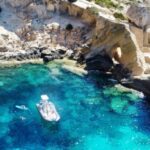
Finally: swimming in transparent natural pools. Clear water is part of Ibiza’s draw, but what makes this different is the way the pools feel like they’re part of the rock itself. It’s not just a beach swim—it’s water framed by cliff walls and natural channels.
What to Bring (So You Don’t Waste the Best Part of the Day)
You’ll get wet, so pack like that’s the plan. Bring:
- Swimwear (under the wetsuit)
- Beachwear
- Water shoes (you’ll be walking on wet rock)
- A change of dry clothes and dry shoes after the activity
Also, set yourself up for sun. One helpful tip from the experience: don’t forget sunscreen, because you’ll be outside and exposed through the session.
If you’re wearing anything that you hate getting salty, switch it out for something you don’t mind drying later.
Language and Group Comfort: Marcos-Style Confidence
A big practical plus is language options. Your guide can speak Spanish, English, or French, so it’s easier to understand safety instructions clearly. And clarity is everything in a sport where you’re both moving on rock and managing water entry.
In the experiences people highlight, the guide’s vibe is consistently tied to feeling safe while still getting freedom to choose your own limits. Marcos, in particular, comes up for making people feel secure and having the right gear ready to use.
So if you’re worried you’ll hold the group back, this is the good news: you don’t have to be a “jump person.” You can be a “scramble and swim” person, and still get a full value morning.
Price and Value: Why $77 Can Make Sense Here
At about $77 per person for a 2.5-hour guided session, you’re paying for more than entertainment. You’re paying for safety support, gear (wetsuit + shoes + safety equipment), and the local know-how to take you along coastline sections you wouldn’t easily find on your own.
This is also a multi-sport experience: climbing-style movement, swimming, and optional cliff jumps. If you’ve tried other activity packages in Ibiza, you’ll notice most either focus on one skill (like pure kayaking) or require you to bring your own gear. Here, a chunk of the “work” is already solved for you.
The value equation is simplest: if you’re physically able and water-comfortable, you’re likely to feel that $77 turns into an experience with real movement, not just a photo stop.
Who Should Book This Coasteering Experience (and Who Should Skip)
Book it if…
- You can handle moderate fitness and about 2 hours of scrambling
- You’re a confident swimmer
- You want a guided way to explore coastline-only terrain rather than a marked trail
- You enjoy choosing your own adrenaline level since jumps are optional
- You want an outdoorsy morning that still feels organized
Skip it if…
- You’re a non-swimmer
- You’re pregnant, have back problems, or have recent surgeries
- You need wheelchair accessibility
- You’re bringing kids under 12
- Your weight is above the limit of 110 kg (243 lbs)
If you’re unsure, the fact that the tour can be rescheduled for windy or wavy conditions is another sign the provider is thinking about your safety, not just filling slots.
Should You Book Coasteering Ibiza?
I’d book this if you want the kind of Ibiza morning that doesn’t feel like a drive-by. The combination of Triassic rock scenery, sea cave exploration, natural pools, and optional 2–10 meter jumps gives you a full range of “wow” moments—without forcing you to be fearless from step one.
But if scrambling sounds like punishment or if open-water swimming makes you uneasy, you’ll probably feel better choosing a calmer water activity. Coasteering rewards the people who show up ready to move.
FAQ
Where is the meeting point?
You’ll meet at the car park next to Restaurante Salvadó. The directions are to drive past the little beach on your left and up the dirt track, then follow it for about 200 meters until you see the car park.
How long is the Ibiza coasteering experience?
The duration is about 2.5 hours.
What’s included in the price?
Included are safety equipment, a wetsuit, liability insurance, a guide, and shoes.
What should I bring?
Bring swimwear, beachwear, and water shoes. You should also bring a change of dry clothes and shoes for after.
Are the cliff jumps mandatory?
No. All jumps are optional.
How high can the cliff jumps be?
The cliff jumps are between 2 and 10 meters.
Do I need to be able to swim?
Yes. The activity is not suitable for non-swimmers.
What fitness level do I need?
You should be prepared for about a 2-hour scramble along the coast, so a moderate level of fitness is required.
Is it safe if the sea is rough?
The tour depends on safe sea and weather conditions. If it’s too windy or wavy, it may be rescheduled for the next available date.
What languages are the instructors?
The instructor can speak Spanish, English, and French.
If you tell me your comfort level with swimming and heights (even just yes/no), I can help you decide whether this one will feel like a blast or a stressful day.